

💭 Week #26: Before You Scroll Any Further… Zoom Out
Almost nothing, almost everything.

Hello there! I’ve gathered a collection of wholesome discoveries for you. Prepare yourself because we are traveling from the minuscule to the very vast. 🌌
— Chessurisme 😺
💭 Earth is a Dot
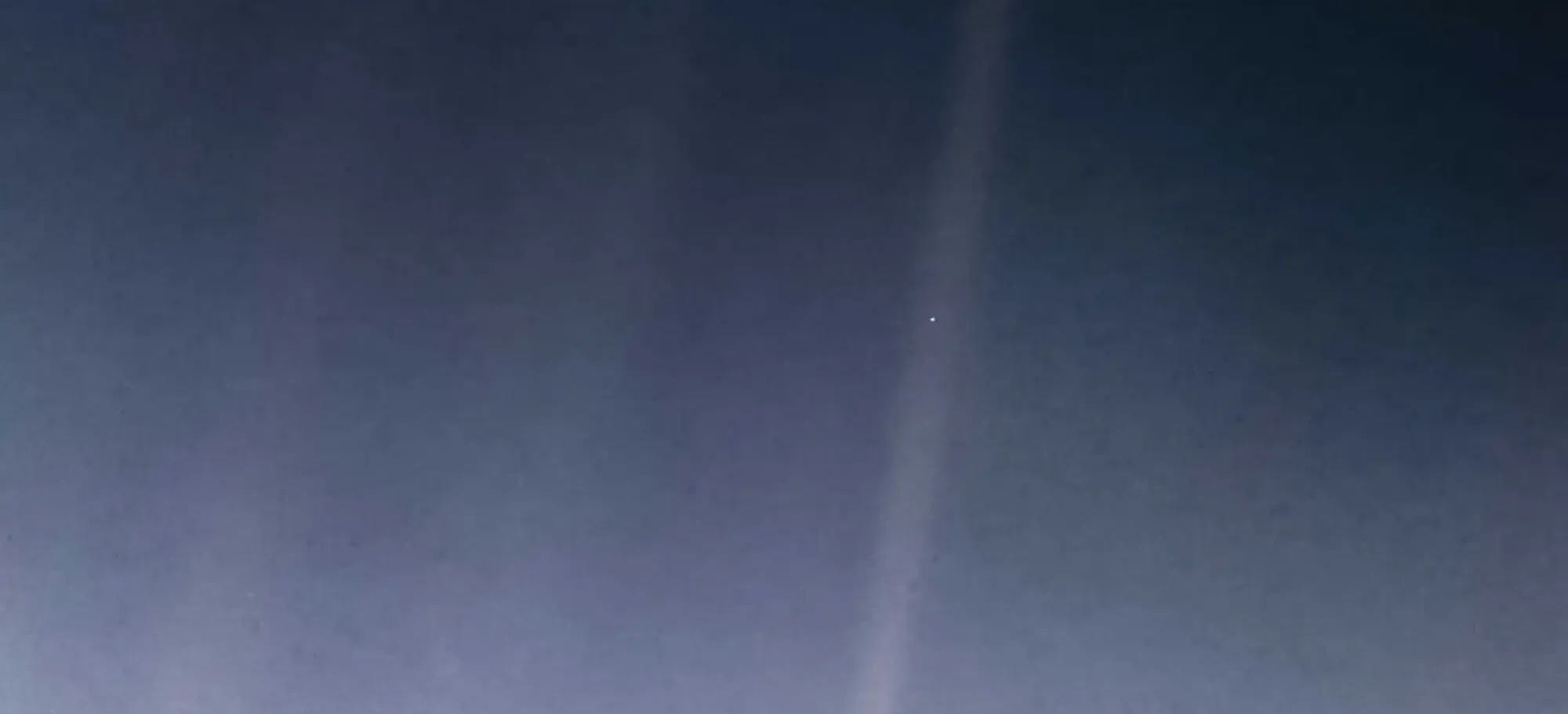
See that small little dot there? It is our home, planet Earth! Due to the vastness of the universe, we appear very minuscule from a distance.
That’s here. That’s home. That’s us. On it everyone you love, everyone you know, everyone you ever heard of, every human being who ever was, lived out their lives… on a mote of dust suspended in a sunbeam.
— Carl Sagan, an American astronomer, on his book Pale Blue Dot: A Vision of the Human Future in Space
It is incredible that this tiny dot supports life in the vastness of such an inhospitable place. How incredible Earth is. It is magnificently designed. 🌏
💭 Wisdom in Miniature
Let’s go inside that pale blue dot and see some of the smallest creatures we can find there. We see arthropods, yes, those miniature creatures crawling and roaming on Earth. We will take our lenses, take a moment to sit down, read this trivia, and reflect on what we can learn from it. 🔍
🐜 Ants That Rescue Their Injured. Some ants don’t leave their wounded behind. If one is injured during a raid, others carry it back to the nest. Inside, they clean the wound—and many survive because of that care. Tiny battlefield medics.
🐝 Bees That “Vote” on a New Home. When a hive needs a new place to live, scout bees search for options. They return and perform a waggle dance to “recommend” a site. Other bees inspect it. Gradually, the colony reaches agreement. No single leader. Just shared decision-making.
🐞 Ladybugs That Gather for Warmth. When the temperature drops, ladybugs gather together, sometimes in large groups. They huddle through winter, conserving warmth and protecting one another. Small red shields form one living blanket.
🦋 Monarch Butterflies That Migrate Across Generations. The journey is too long for one butterfly to complete. Each generation flies part of the way, then the next one picks up where the last one left off. What’s amazing is that they always come back to the same forest. A path that is remembered without remembering.
🐝 Bumblebees That Learn from Each Other. Bumblebees can learn how to solve simple problems, like pulling on a string to get food. Even more amazing, other bees can see and learn the same trick. Information is shared from one flower to another.
🕷 Social Spiders That Share Care. In some spider colonies, mothers care for young together. If one mother dies, others may continue guarding or feeding her spiderlings.
Note: If you want to learn more about these little creatures, just tap the bold orange text located at the beginning of each trivia.
💭 Baby Sea Otter Reunites to Its Mother
It is heartwarming to witness the reunion of a rescued young sea otter with its mother. The wildlife rescue team uses speakers just to find the mother. Read the article to find out how the mother manages to reclaim her pup and how the rescue team ensures that the sea otters are safe. Also, they named the pup Caterpillar. 🦭
I’ve noticed that the pup floats as it is lowered to the water. They don’t sink?
💭 Live Wildlife Cameras
Do you want to see live recordings of animals in a zoo? Each of these animals has distinct behavior. You might see them eating, napping, taking a bath, climbing, or doing anything. Just for an example, look at that panda taking his afternoon nap. Take a moment to roam in the San Diego Zoo and see various animals such as pandas, koalas, polar bears, and more.
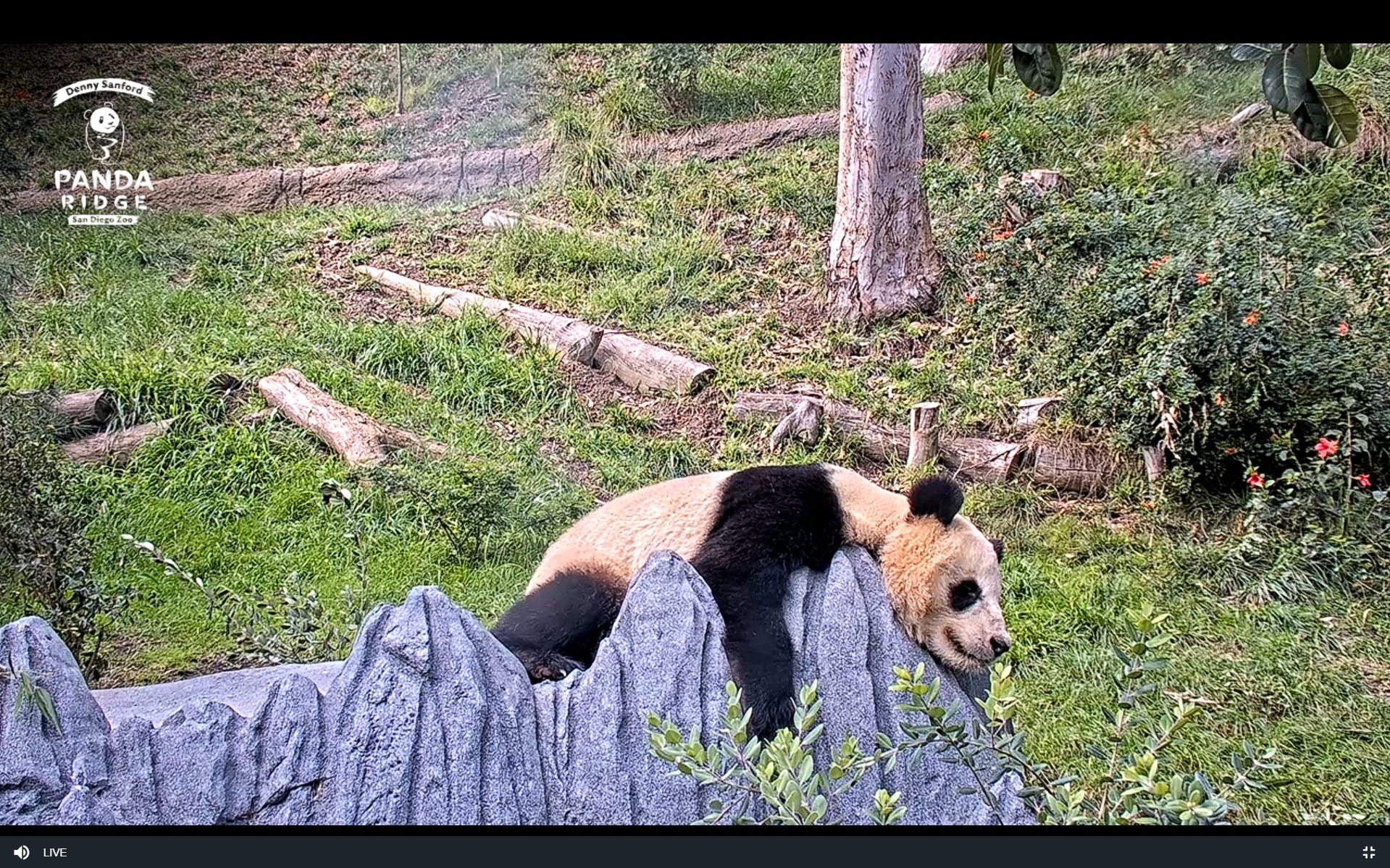
The San Diego Zoo website stated that they rebroadcast live daytime broadcasts at night, allowing you to see the animals then.
✱ See the live recordings at San Diego Zoo
💭 Blue Hour
Blue hour is a rare moment that happens twice every day. It happened at 20 to 96 minutes after sunset or before sunrise, depending on factors such as location, time of year, and atmospheric conditions.
It is magnificent seeing Earth at this time. 🔵


I even wrote a short poem about the blue hour a few years ago, as I saw how magnificent it was; it is so rare that the whole world appears completely different. I say it was warm, though the air started to feel cold. You can read it in our first entry of RandomNiceStuff.


If you are viewing this newsletter via email, you may need to visit the website to see a full view of each image above. If you want to visit, go here.
💭 Earth from Space Image Collection
From Earth, we are now zooming out. The European Space Agency collects some of the beautiful arts of Earth—ahem, landscapes—to showcase how magnificently we viewed Earth from space. See some of the collected images.
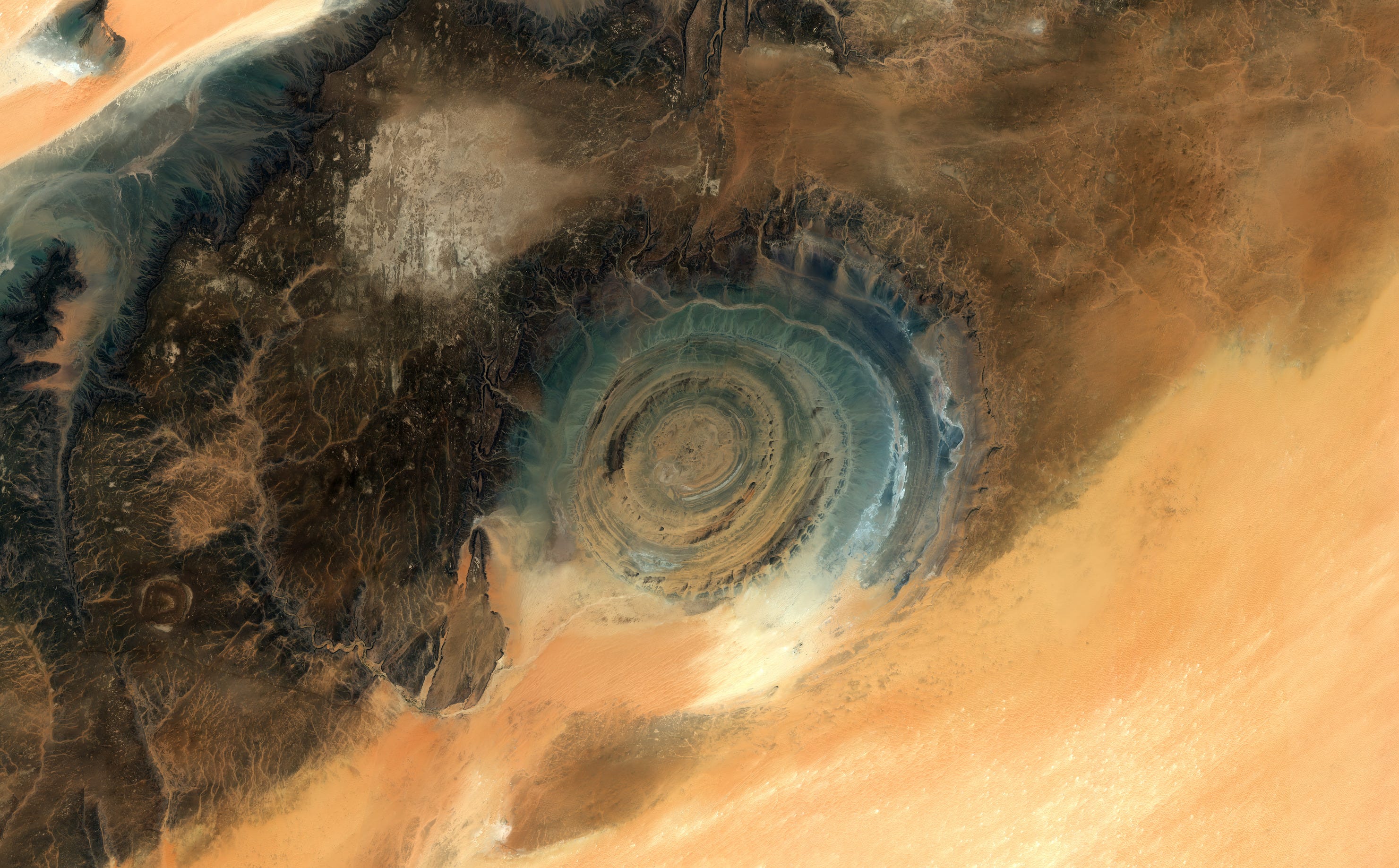
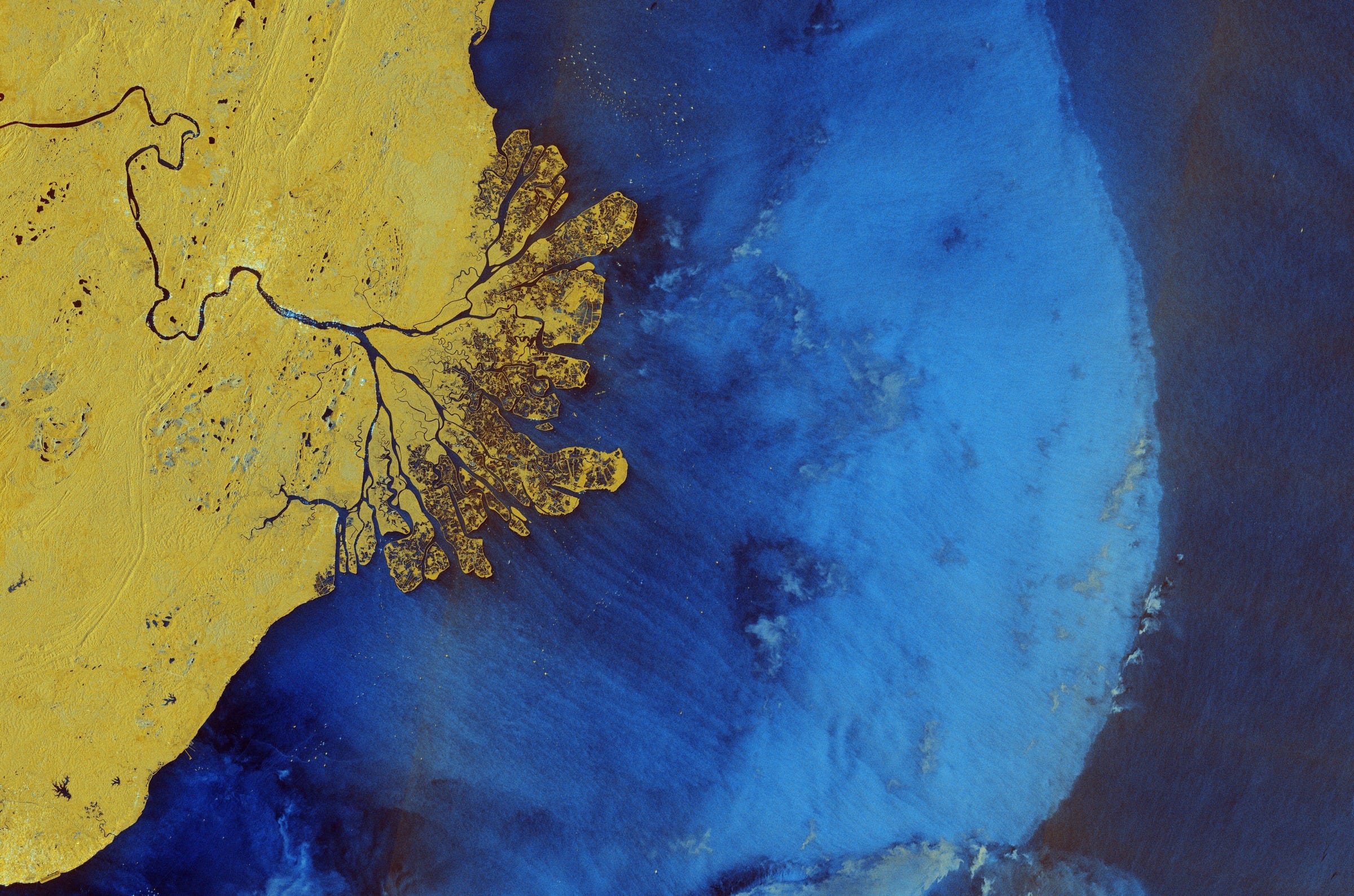

These pictures inspire wonder and allow us to take in the breathtaking aerial view of Earth. Seeing this tells us how small we are on Earth, just like dots, easily swept away if so. It is a pleasure to know that we are small, and yet we are enough!
💭 Solar System Moves Around Milky Way Galaxy
We know that our planet revolves around the sun, but did you know that our solar system also moves around the galaxy? NASA says that we are moving at an average velocity of 828,000 km/hr. They added that even at that high rate, it still takes us about 230 million years to make one complete orbit around the Milky Way! The distance is so immense that it’s hard to comprehend.
Many of us imagine the solar system as a calm set of rings around a still Sun. But the Sun is moving—sweeping through the galaxy. And as the planets revolve around it, their paths stretch into vast spirals, like corkscrews carving through space. 🪐
💭 Webb’s First Images
Now, let’s zoom out further and see how magnificent the universe is. Here are Webb's first images; the very first science images were released by NASA back in July 2022. No one can define the galactic glories shown in these images.
I am going to tell you that what we currently see or observe in the universe is delayed truth. Why? We observe at vast distances. Light travels incredibly fast—but across vast distances, even light takes years to reach us.
Let’s explore some of the images:
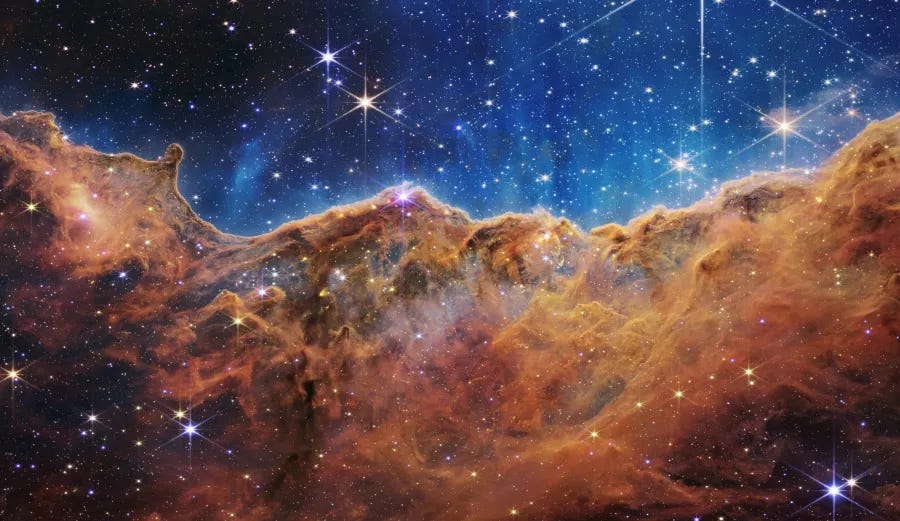
See that cliff? That is Cosmos Cliff in a small region of the Carina Nebula. It is not rock or land anyway; it might look like towering mountains at sunset—golden ridges and deep blue skies. But those “cliffs” are immense walls of gas and dust, sculpted by radiation and stellar winds, and lit from behind by newly forming stars. Our intuition about scale is unreliable. Beauty can disguise immensity. 🤩 Also, the span of this cliff is several light-years, which means it is very long. If you put Earth in Cosmos Cliff, it is just invisible.
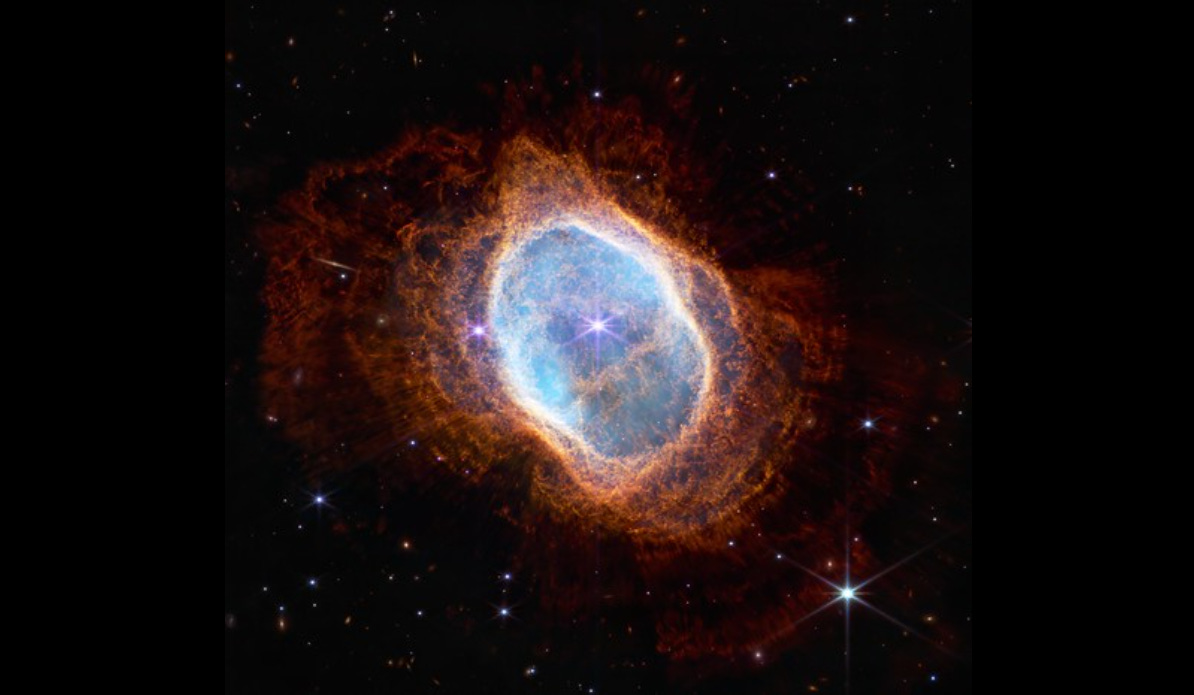
This is the Southern Ring Nebula. At the center are two stars, not one. One of them is dying. This dying star looks faint and creates this expanding shell. It resembles destruction transforming into a beautiful structure and light, which is quite mesmerizing to see.
See the bright blue in the center? That glow comes from gas energized by intense ultraviolet radiation. The surrounding fiery orange edges are gas and dust that are cooler and pushed outward into space. The faint outer ripples are the material that has been thrown out in waves over time.
From far across the galaxy, we witness a star’s farewell. But we are looking into the past, and its present remains unknown to us. Well, let's see it in the next two thousand years! 🌌
✱ Explore more of the first images
💭 The Giant Eye
However far you can see—even if you could detect every kind of light—that limit is the observable universe. The observable universe is the farthest distance light has had time to travel to us. Artistically, Pablo Carlos Budassi renders the observable universe—and when everything is compressed into one frame, it strangely resembles a giant eye.
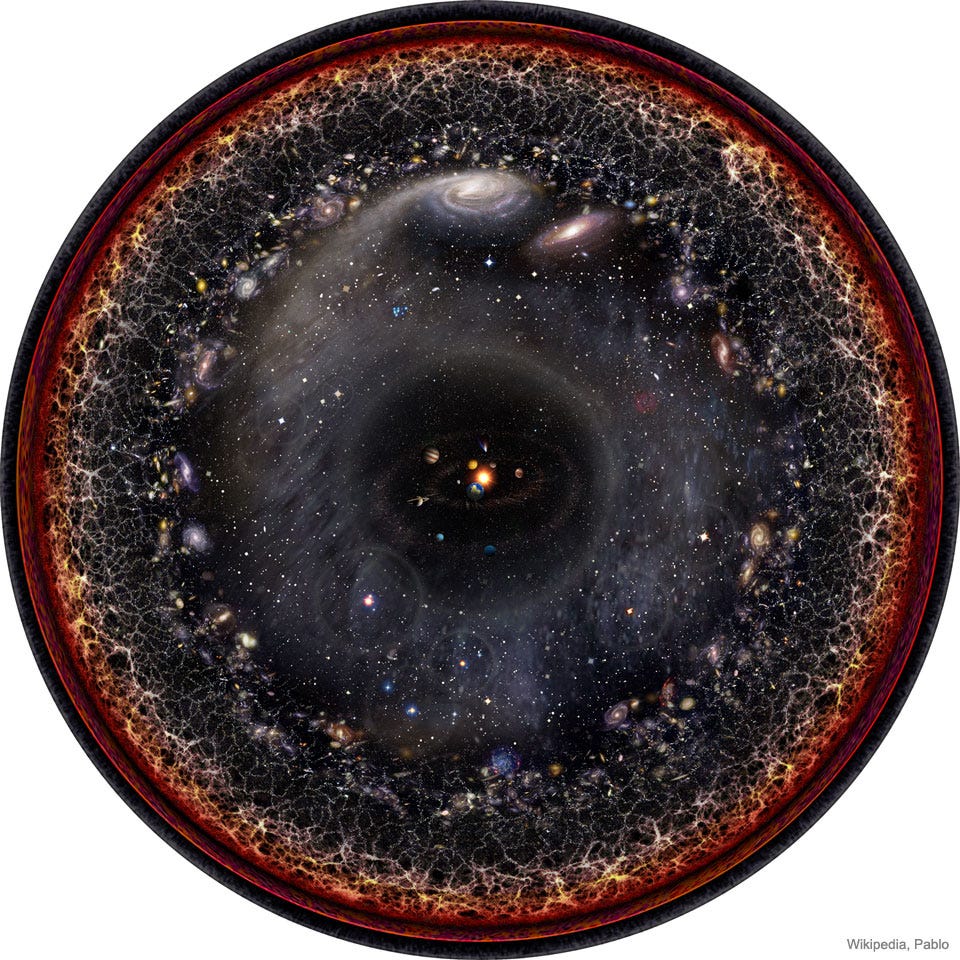
We’ve traveled far enough. Let’s settle back into Earth—our small, steady home. This place is unlike any other—our only home. 🌏
See you then, next week! Arrivederci! 👋🏻
— Chessurisme 😺