

💭 Week #28: The Romance of Obsolete Things
Why typewriters, film cameras, and slow media still feel sacred.

When was the last time you held something that pushed back?
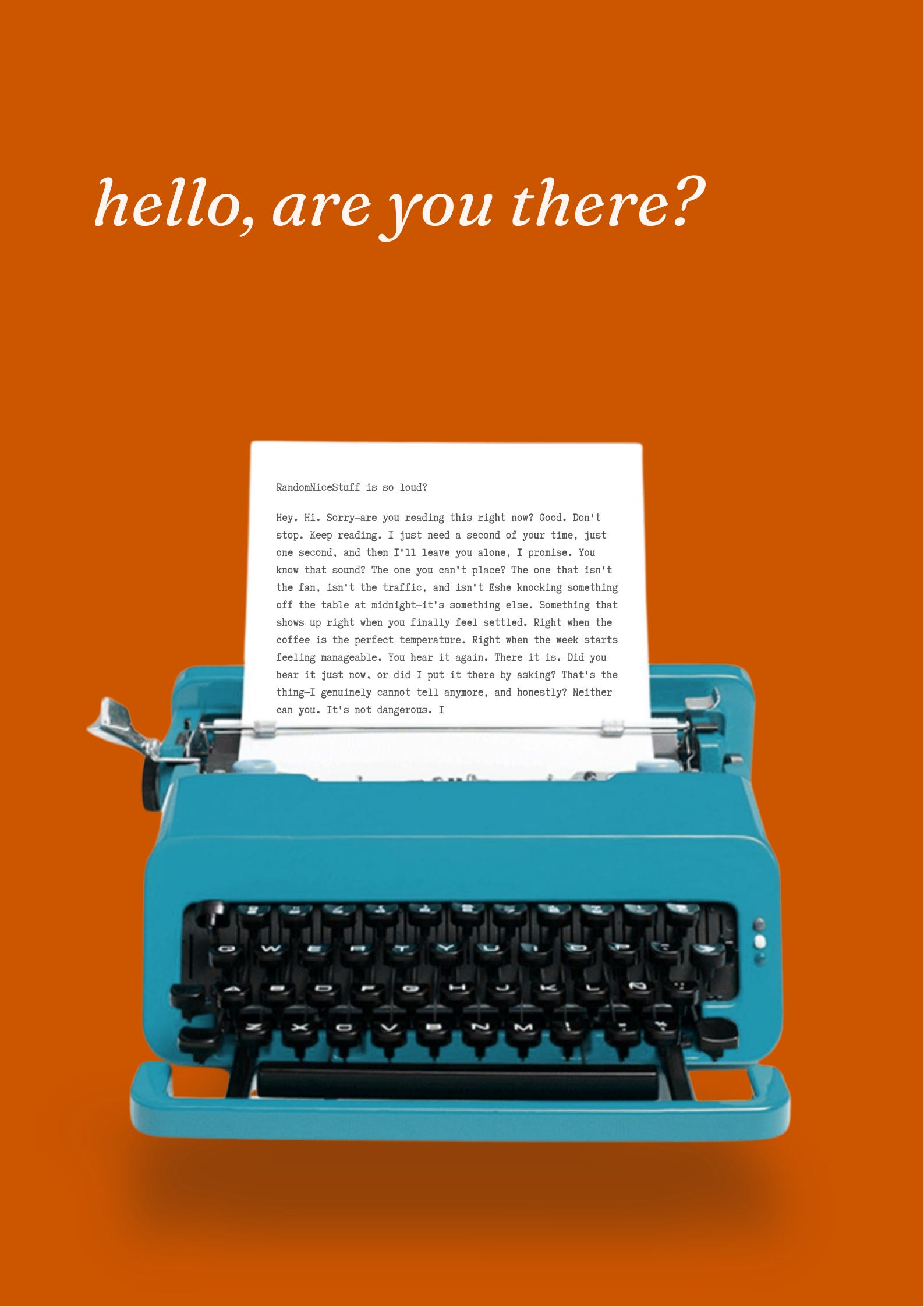
Not something stubborn. Something alive—a thing with texture, resistance, and a small mechanical personality. A typewriter key that requires your actual weight before it moves. A film camera shutter that clicks once, final and irreversible. A handwritten letter whose ink caught the paper’s grain and left a little groove you can trace with your fingernail.
We have softer tools now. Everything glides. Screens respond to the lightest touch, and nothing we make leaves a mark on the thing that made it possible. It is frictionless, and it is fast, and somehow—strange as this sounds—it can feel like nothing happened at all.
But there is something about the obsolete object that refuses that forgetting. Saul Leiter, a photographer, once said that photographs are “tiny fragments of an unfinished world.” The same might be said of all the old things we keep returning to. Not because they are better—but because they are incomplete. They ask something of us. They leave a little space that we have to fill ourselves.
Maybe that is what “sacred” means, in the end. Not perfect. Not preserved behind glass. But genuinely unfinished. Open. Still waiting for a hand to reach in.
What old thing are you still reaching for? 🌿
— Kyle
💭 35mm in Unsplash
You may have heard of Unsplash if you've ever looked for free pictures to use in your project. There are some outstanding 35 mm images on Unsplash. You can find more information on this website if your next project is about vintage. Having this free website for artists was impressive.
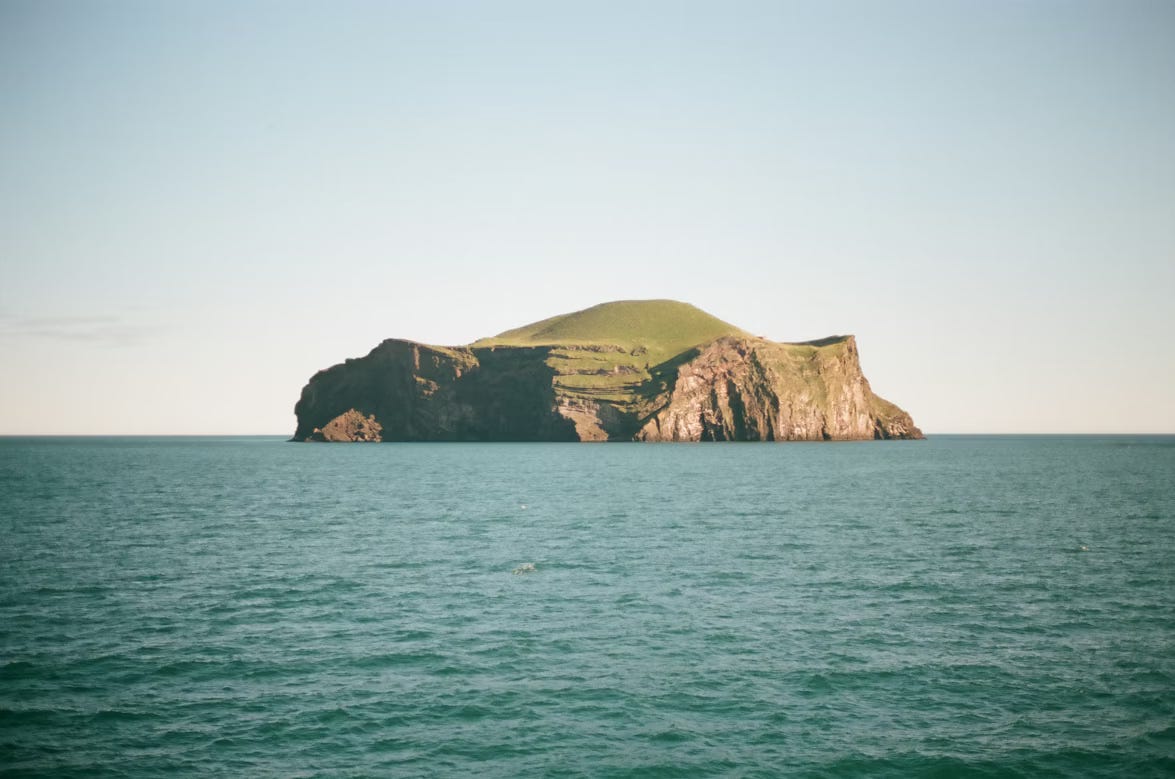
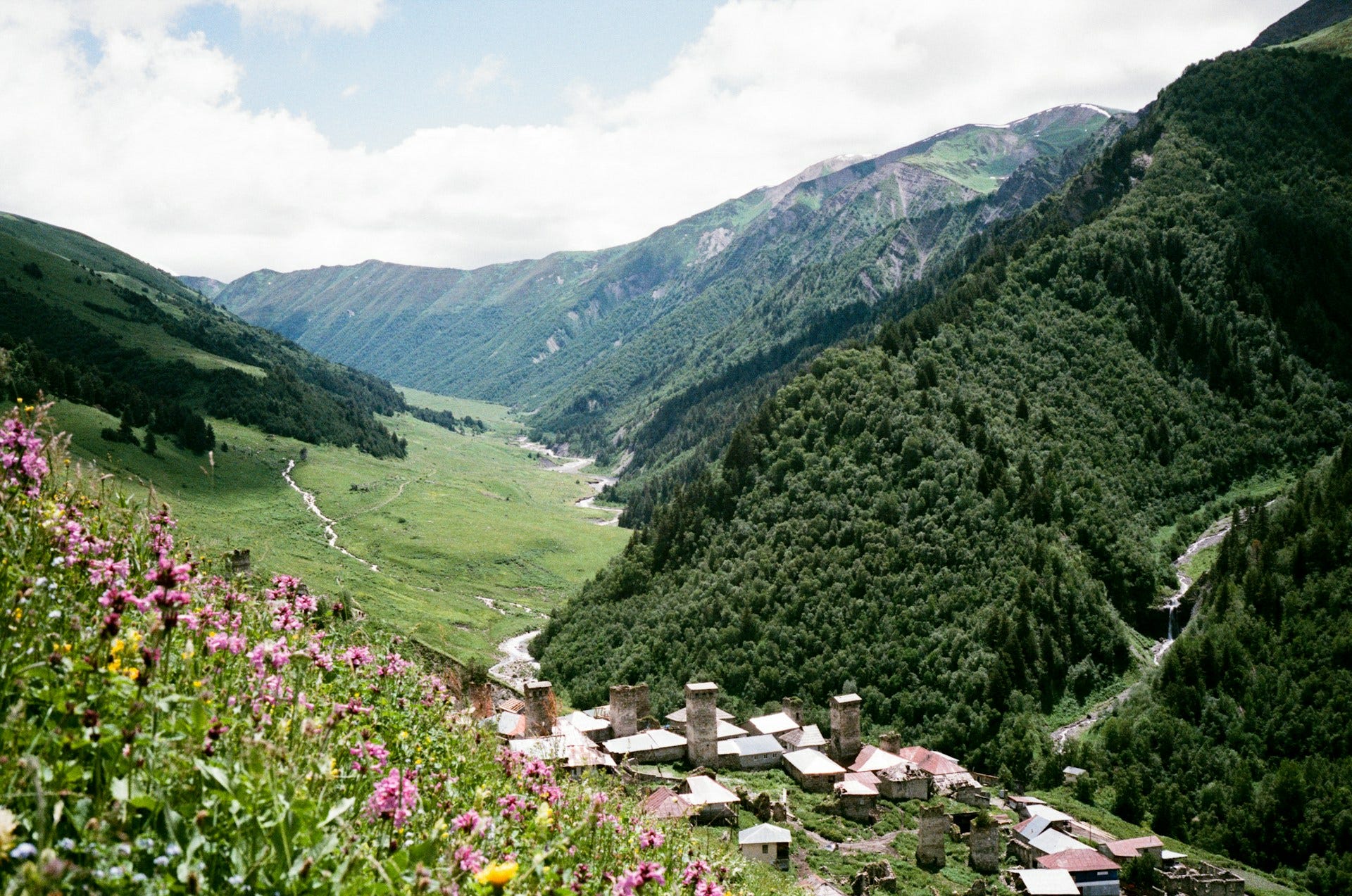
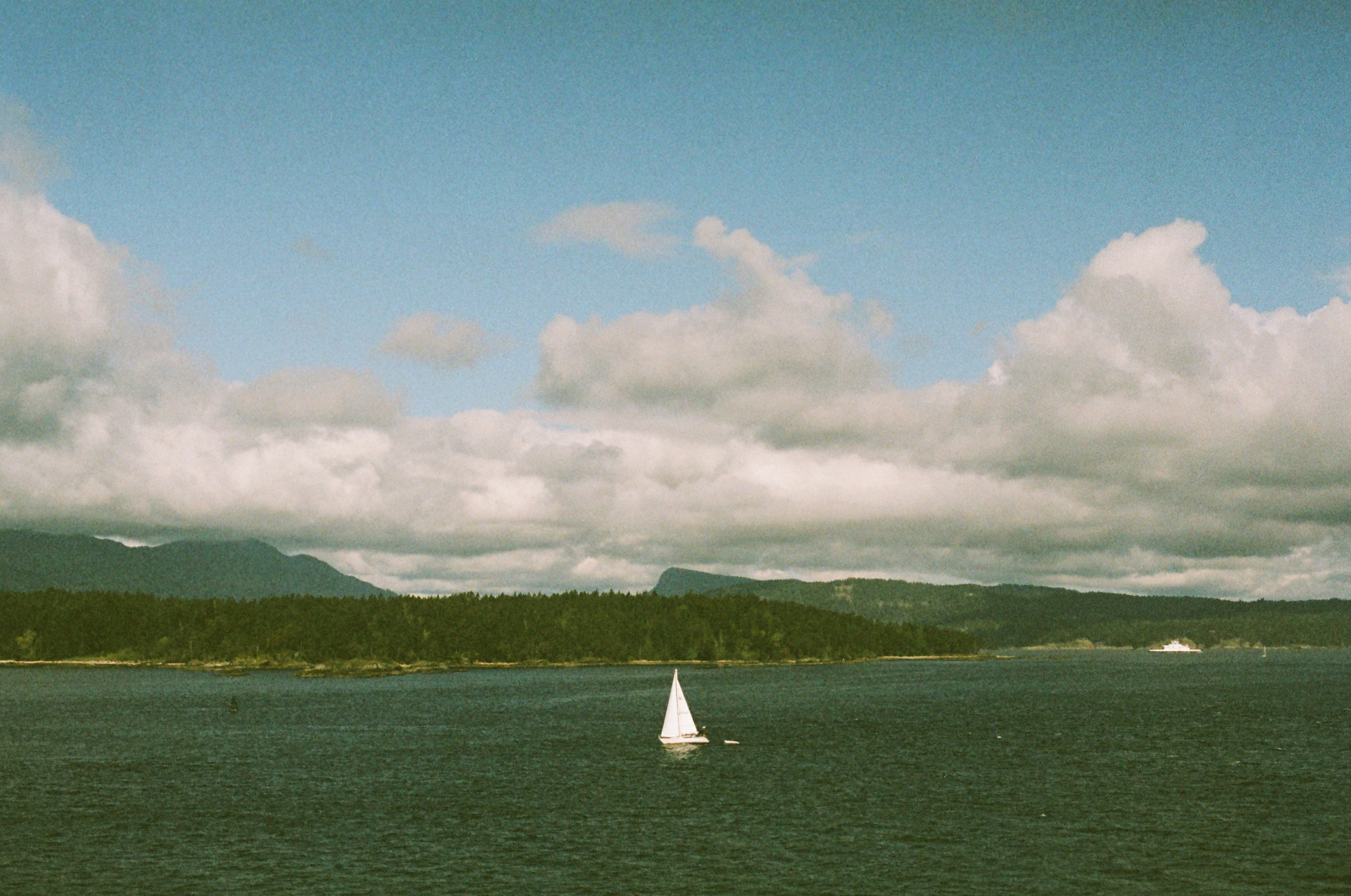
What makes 35mm film so great is its unique quality. It gives you high-quality pictures with lots of detail and beautiful grain, so it's a wonderful choice for people who like the unique qualities of film. 35mm film isn’t as common as digital cameras, but it still offers a unique experience and a way to take pictures with a look that digital formats can’t match.
💭 Royal Aristocrat
Billy Collins wrote what may be the quintessential typewriter nostalgia poem. The poem recalls late nights typing on a loud machine, cushioned by newspaper so as not to wake the house, and ends with one of the most beautiful closings in contemporary poetry—the image of the writer “adding to the great secretarial din, that chorus of clacking and bells, thousands of desks receding into the past.”
Royal Aristocrat
by Billy Collins

My old typewriter used to make so much noise
I had to put a cushion of newspaper
beneath it late at night
so as not to wake the whole house.

Even if I closed the study door
and typed a few words at a time —
the best way to work anyway —
the clatter of keys was still so loud

That the grey and yellow bird
would wince in its cage.
Some nights I could even see the moon
frowning down through the winter trees.

That was twenty years ago,
yet as I write this with my soft lead pencil
I can still hear that distinctive sound
like small arms fire across a border,

one burst after another
as my wife turned in her sleep.
I was a single monkey
trying to type the opening lines of my Hamlet,

often doing nothing more
than ironing pieces of paper in the platen
then wrinkling them into balls
to flick into the wicker basket.

Still, at least I was making noise,
adding to the great secretarial din,
that chorus of clacking and bells,
thousands of desks receding into the past.

And that was more than can be said
for the mute rooms of furniture,
the speechless salt and pepper shakers,
and the tall silent hedges surrounding the house.

Such deep silence on those nights —
just the sound of my typing
and a few stars singing a song their mother
sang when they were mere babies in the sky.
💭 Kodachrome by Luigi Ghirri
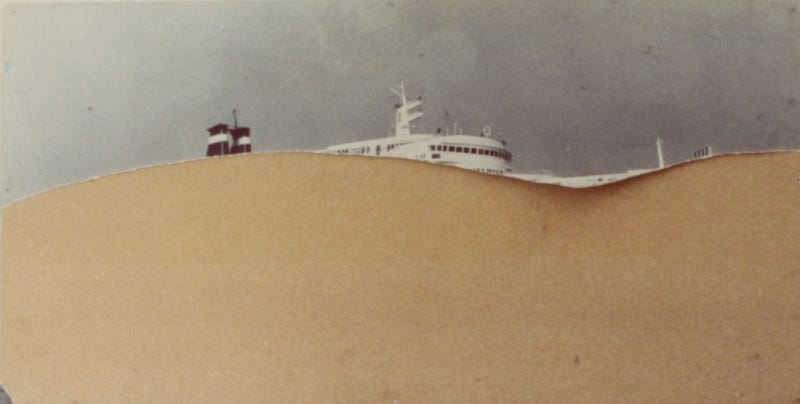
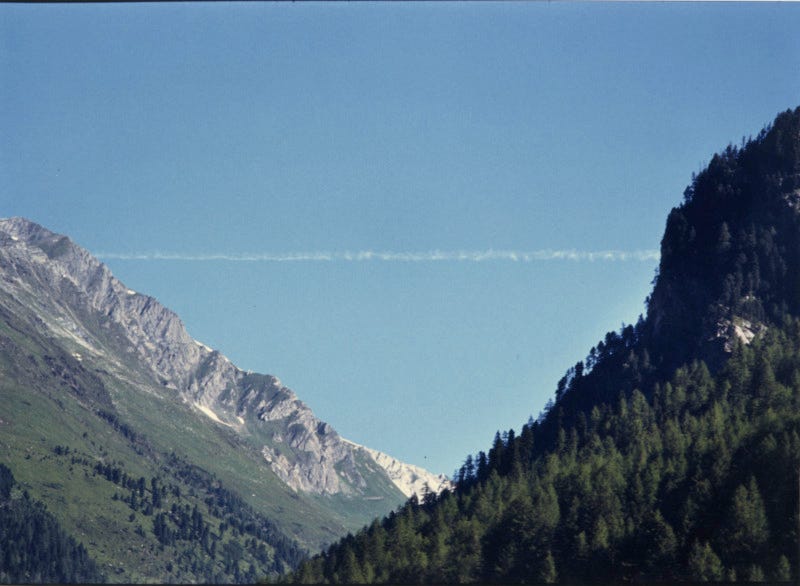
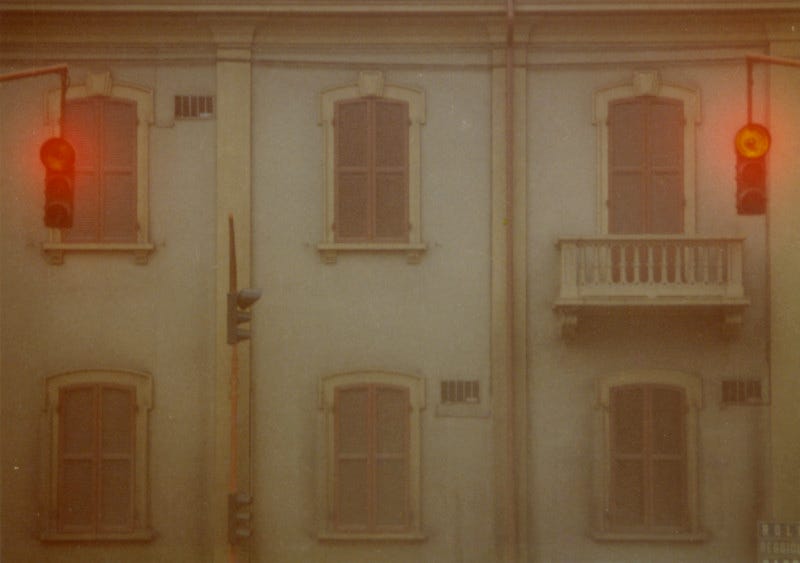
Italian color photography pioneer Luigi Ghirri shot his landmark 1978 photobook Kodachrome on Kodak Kodachrome film—a stock now discontinued, making the work a literal artifact of obsolete media. The nearly 100 small color photographs capture sunlight on walls, reflections in puddles, potted plants, quiet Italian street scenes—what Ghirri called “minimal journeys” taken within a few miles of his home. The warm, slightly faded tones feel like flipping through a beloved family photo album.
See some of his photos:
💭 Analog Quotes
“Cameras, in short, were clocks for seeing, and perhaps in me someone very old still hears in the photographic mechanism the living sound of the wood.” — Roland Barthes, Camera Lucida (1980)
“Print is predictable and impersonal, conveying information in a mechanical transaction with the reader’s eye. Handwriting, by contrast, resists the eye, reveals its meaning slowly, and is as intimate as skin.” — Ruth Ozeki, A Tale for the Time Being (2013)
“In an age of speed, nothing could be more invigorating than going slow. In an age of distraction, nothing can feel more luxurious than paying attention. And in an age of constant movement, nothing is more urgent than sitting still.” — Pico Iyer, The Art of Stillness (2014)
💭 Substack Archiver
What if you could save your own Substack articles as PDFs?
The good news is that you can now do so! I have been thinking about how to save my articles for the past few days, and here it is.
To make it work, you need to find one of your articles on Substack first. Second, visit this site and save it as a bookmark for later. Third, put the link in the box. Next, pick one of the formats you want to use to save. After that, click the button and wait. Finally, download it, and you have it.
Additionally, you can batch downloads as long as they are articles from Substack.
💭 Closing Thoughts
Eshe is a mom now—something none of us saw coming. She welcomed her kittens. Funny, we will have new authors! 🟠
P.S. Kittens don’t have names yet. 😺