

💭 Week #15: Soft System: Designing Life That Doesn’t Hurt
Sometimes, the systems we choose forget that we are human first.

We see systems everywhere—planners, timers, calendars, routines. But not all of them are kind to us. We, as humans, are complicated. And some days, those systems feel cold, rigid, or simply off. 🥲
To-do lists can feel overwhelming, tedious, or uninspiring. Time-blocking feels inflexible. Even the Pomodoro timer—a tool meant to help us—can feel too demanding, too much. ⏱️
Are we just lazy?
Or do these systems simply not work for us?
Or what?
The Pain of Misaligned Systems
Discipline is a powerful way to begin the things we don’t want to do. It starts what resistance would otherwise delay. We need this guidance to stay on track. But let’s be honest—sometimes it hurts.
What we often don’t realize is that this rod of discipline isn’t swinging to punish us—it's leaning to guide. The pain doesn’t come from the guidance itself. It comes when our complicated, tangled selves don’t yet align with the direction it wants to lead us. 🧭
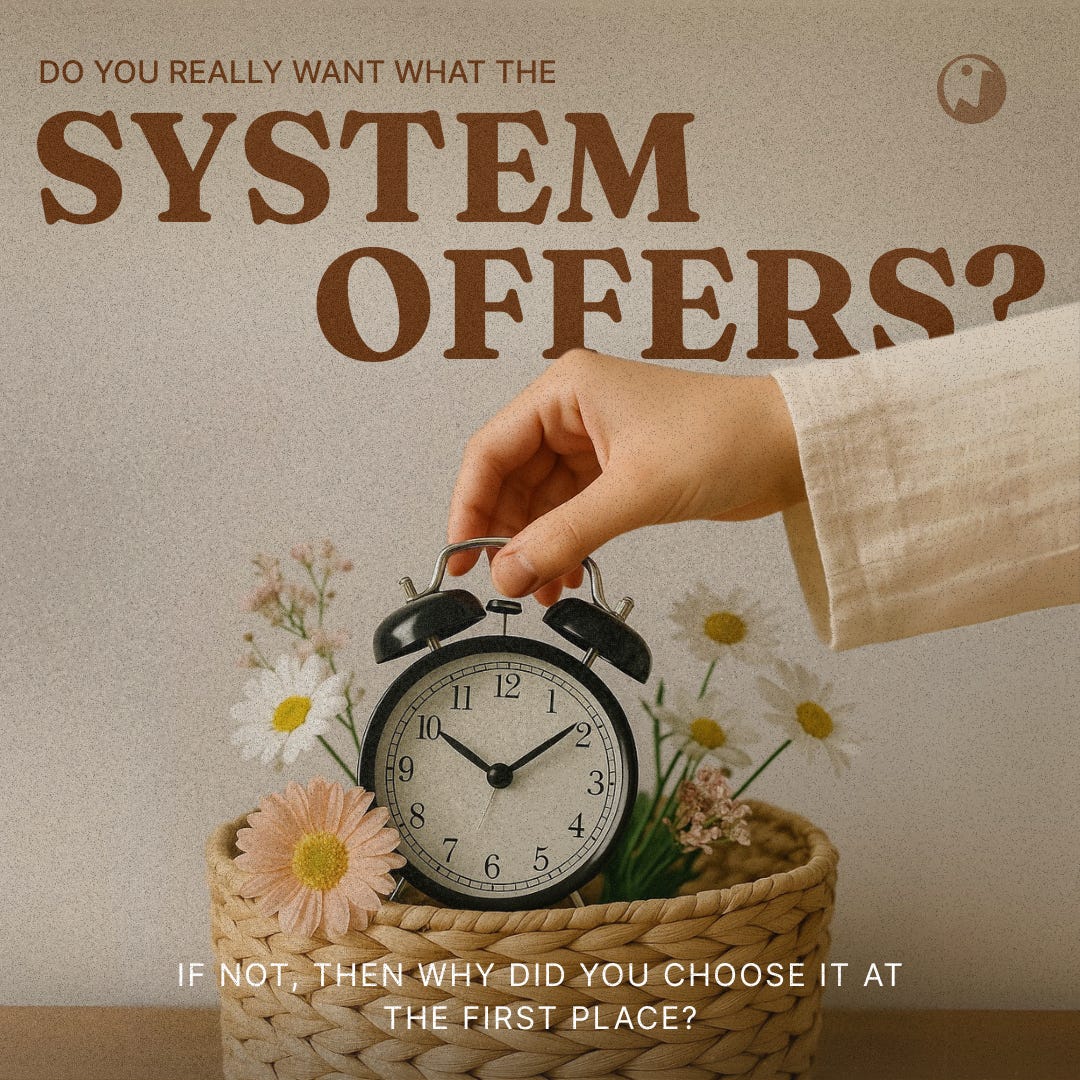
But what if we could keep the guidance without the rigidity? What if our systems could bend with us instead of breaking us?
Enter Soft Systems
That’s where soft systems help. They don’t reject discipline—they simply help us walk with it more steadily, more gently.
Sometimes we get lost,
And we need reminders—
To get back, to begin again—
To be true again.
Often, we are exhausted, stressed, emotionally shut down, or even momentarily overwhelmed. 🤕
That’s when a soft system gently gets us moving toward things that matter. It responds to our emotional wellbeing instead of being coldly mechanical. It allows us to be flexible when things don’t work. It becomes like a gentle breeze, supporting us through tasks while helping us focus on what matters most.🧶
The discipline here considers the situation. Remember: when something is hitting you but not helping you—that’s not discipline, that’s violence. 💢
Creating Your Own Soft System
How do we find such a soft system? ☁️
Maybe we don’t find it.
Maybe we create it for ourselves.
Not all soft systems are ready-made. Perhaps you’ve found one that works for you—congratulations! But more often, they are formed through trial, error, and tenderness. The goal is to make it personal, custom, and gentle—soft yet motivating, and still practical.
Here are some guiding principles to help you create one of your own:

Begin with Compassion, Not Control
James Clear noted in his book, “The people with the best self-control are typically the ones who need to use it the least.” (Courtesy to my friend for introducing me to this.) 😉 Controlling our situation in a heavy-handed way is often ineffective. Compassion, on the other hand, lightens how we approach our tasks. It creates a sense of comfort that helps us get things done. This kind of soft system isn’t manipulative—it’s supportive. Start your day by asking, “What would feel supportive today?” instead of jumping straight into a strict to-do list.Example: Instead of “Read chapter 3 today,” try “Start reading for 2 minutes.” 📃

Design for Flexibility, Not Perfection
Time blocks often feel rigid when we dump random tasks onto our calendar and set approximate times to complete them. What if we made our planning more fluid—flexible in a way that’s still practical? Open-ended plans work better: “morning, afternoon, evening focus” instead of rigid hourly blocks. This kind of soft system isn’t idealized—it’s adaptive. Start planning generally, then make it open-ended. Instead of “work for one hour,” try “spend some time on this.” Pair this flexibility with soft anchors so your flexibility stays purposeful, and you don’t drift away. 🛟
Make It Visible, But Gentle
Out of sight is out of mind. To stay on track and remain practical without floating away, visual cues help. Create visual reminders with gentle messages—a calm desktop wallpaper, a handwritten sticky note that says “One thing at a time,” or a phone reminder labeled “You’re doing enough. Take some rest.” This kind of soft system isn’t demanding—it’s encouraging. 👀

Create Soft Anchors
Having anchors is essential for staying practical when completing tasks. Soft anchors help us move toward our priorities—especially when we feel overwhelmed or scattered. They gently guide us back to what matters, without pressure. Unlike rigid schedules, soft anchors reinforce both prioritization and a calm sense of urgency—the kind that says, “This matters, let’s begin softly.”A soft anchor might be:
A consistent cue: “after lunch = deep work”
A time frame: “evening = no-screen time”
A kind phrase: “Start with what matters most”
These anchors don’t push us—they pull us into purpose. They help us move forward meaningfully, not forcefully. ⚓
Let It Flow with Our Energy
To make your soft system effective, test it out. Track your energy for a few days. Note when you feel most focused, tired, creative, or distracted. This helps you stay practical with self-awareness. You might discover that you’re most creative at 9 AM—so you reserve that time for design or writing, not emails. ✍🏼

Build Forgiveness into the System
Sometimes, we can’t complete the tasks on our list. Often, we feel guilt or shame for missing them. Adjust this by adding a forgiveness rule to every habit—so you still grow in a way you can sustain. If you miss something, you’re not behind—you’re adjusting. This kind of soft system isn’t streak-driven—it’s forgiveness-based. If you miss journaling one night, your system invites you: “Want to reflect in the morning instead?” Then you can gently address what you’ve missed. Streaks can create pressure, but forgiveness builds consistency with compassion. 🌅

Reflect Often and Adjust Freely
Review your system at the end of each week to create something sustainable and supportive. Take 5 minutes to reflect with these questions:
What helped?
What felt too tight?
How can I adjust next week?
These questions help you determine whether your system still serves you. For example, you may realize you dislike timers—so you switch to ambient music for focused work.⏰
Embracing Our Humanity
As we embrace how wonderfully human, we are, we start to appreciate the things we might have missed in our rush through each day. 💖
Enjoy creating your own soft systems: capture, test, and iterate. Stay gentle with yourself in this hustle world.
Chessurisme
The Curator and The Creator of RandomNiceStuff

What resonated with you from this approach? We’re always listening.
If this content resonates with you, consider sending us a cup of coffee! ☕

What does Eshe’s daily routine look like? 🐈⬛

Playing anything for 6 hours—including midnight
Sleeping anywhere for 8 hours
Hunting lizards for 9 hours—yes, she’s that committed
Meowing for food (or just because) for 1 hour
The impressive part? She always completes her routine perfectly—unless her meal is late. In that case, the meowing lasts a bit longer… 😾

I have a photo I captured years ago that shares a similar concept with Eshe’s. 🪜